Later What'sNEW Jul - Sep 2026 Later What'sNEW Jul - Sep 2026
The Abiotic Background is the title of a report on a workshop among "scientists and technologists from different disciplines and career stages, ...to recognize, characterize, and understand the set of abiotic substances, structures, and processes that may ...[mislead] the search for evidence of life beyond Earth." Why do they assume that much or all of the organics in space are produced abiotically? If they have ever heard of panspermia, they don't mention it.
 Exploring the Abiotic Background for Life Detection, a workshop at the Carnegie Institution for Science in Washington, D.C., 31 March - 03 April, 2025. Open-access 17-page conference report, Astrobiology, 15 Sep 2026. Exploring the Abiotic Background for Life Detection, a workshop at the Carnegie Institution for Science in Washington, D.C., 31 March - 03 April, 2025. Open-access 17-page conference report, Astrobiology, 15 Sep 2026.
 03 Sep 2026: a recent example of the same assumpion. 03 Sep 2026: a recent example of the same assumpion.
Viruses are ubiquitous mobile genetic elements that are obligate symbionts of cellular life forms and replicate exclusively within host cells.
These are the opening words of an instructive article by two of the world's leading experts on viruses. Their investigation leads to a question: Is there an evolutionary continuum from viruses to cells? They answer, definitely not: ...there is no support for scenarios of evolution of viruses... from cells, or vice versa....
The same sentence continues, although extensive gene exchange between MGE and their hosts certainly made major contributions to the evolution of both cells and viruses. I construe this to endorse cosmic ancestry, but, of course, Koonin and Krupovic remain staunch darwinists, in the broadest sense of the term (#). Later, to answer the title question, they innocently state, ...these giants of the virosphere evolved from smaller, simpler viruses via gene accretion. More cosmic ancestry — whole genes provide new programming. No one seems to notice that the philosophy has fundamentaly changed, and the genes remain unaccountable. With apologies for piling on, this Open-Access article with a different focus is extremely informatve about viruses.
|
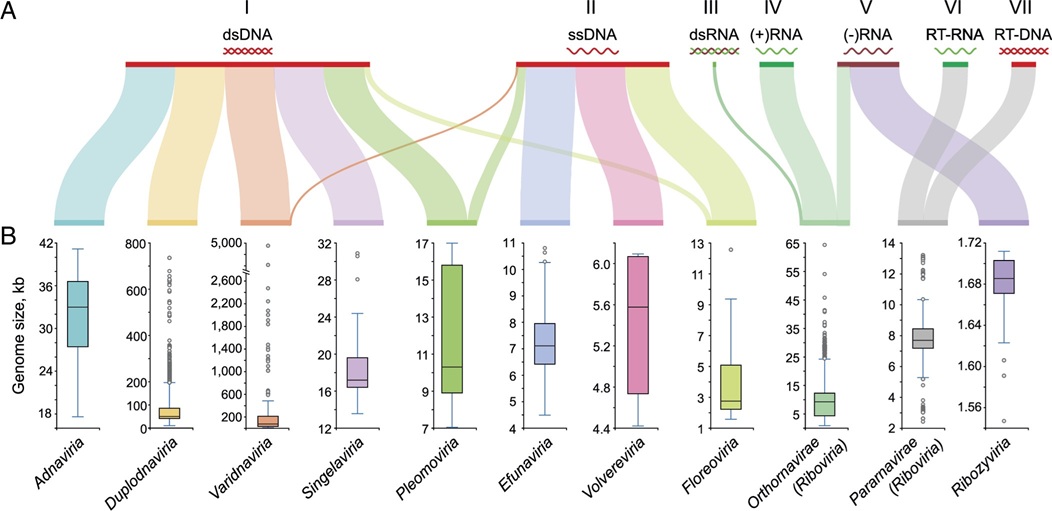
The realms of viruses and their genome size ranges. (A) Baltimore classes, which are defined based on the type of nucleic acid encapsidated in the virion and accordingly determining viral replication-expression cycle (8, 9), are connected to the virus realms. (B) Range of genome sizes (kb) is shown for each viral realm. The genome size data for classified representatives of each realm were retrieved from the NCBI GenBank database.
|
Why did some viruses evolve to be giants while others did not? by Eugene V. Koonin and Mart Krupovic, PNAS, 11 Sep 2026.
 Viruses and Other Gene Transfer Mechanisms has a primer and many updates. Viruses and Other Gene Transfer Mechanisms has a primer and many updates.
# Darwinism, in its broadest sense, is the conviction that life can –somehow– invent and deploy its own genetic programming.
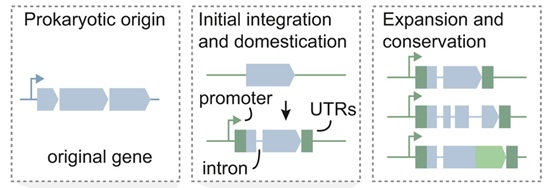 These observations suggest that HGT was, and continues to be, a major force shaping plant evolution, exemplifying the potential significance of HGT in eukaryotic biology more broadly.
Cross-kingdom gene transfer as a driver of land plant evolution, by Arie Fridrich and Nicholas A.T. Irwin, Current Opinion in Plant Biology, doi:10.1016/j.pbi.2025.102850 [link], Feb 2026.
Ada Yonath [1939-2026] ...Crystallographer who overcame 'impossible' challenge of mapping the ribosome, by Georgina Ferry, Nature, 08 Sep 2026.
Her main message to ...young audiences was to choose an aim in life that they were passionate about....
How does life evolve? More specifically, where does new genetic programming come from? For example, where do the genes for photosynthesis come from? These are valid scientific questions. I have long promoted research to pursue them.
In 2006, I attempted to launch a prize to demonstrate the establishment theory of evolution in computer models. I presented the idea to experts in Artificial Life (a successor to Artificial Intelligence, which was then in eclipse.) I hoped that community would welcome the challenge, but they weren't interested. I shouldn't have been surprised, because I had not concealed my doubts about Darwinism. Apparently, I was consdered a heretic.
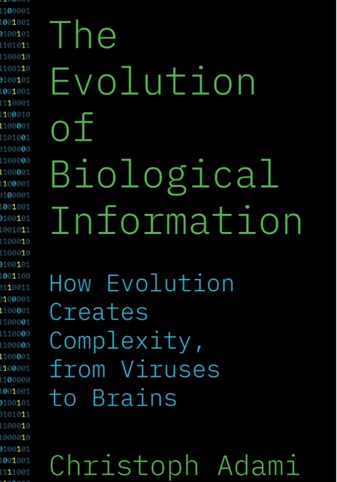 Christoph Adami, the author of an admired ALife model named Avida, was one of the most respected members of that community. After years of work, in 2024, he has published a book of his mature thoughts about evolution. I felt obligated to read it.
Adami begins with a plain-language outline of the Darwinian Theory of Evolution. He is not open to skepticism: The logic of selection is so unassailable that it seems like an utter triviality. That this is not so is exemplified by the stupendous variety mechanisms and technical complications that accompany natural selection.... This is followed by a graph slanting upward, to help get the reader into the mood. Adami does agree that computer models are useful for understanding biological evolution.
The book has hundreds of graphs and equations, with accompanying text. Topics include biased typewriters, entropy and information, evolution as a Maxwell Demon, the fitness landscape before evolution and many more. Chapter 4 gives a detailed look at ALife models, and it discusses Lenski's LongTerm Evolutionary Experiment (LTEE) with bacteria. The factual content is almost overwhelming.
Ultimately, I became impatient. In spite of Adami's claims (made plain in the book's subtitle) he never directly addresses the basic question: where does genetic programming come from? The situation has not changed since The Evolution Prize was proposed, twenty years ago. Dare I add, Chris, the prize is still available.
The Evolution of Biological Information: How Evolution Creates Complexity, from Viruses to Brains, by Christoph Adami, Princeton University Press, 2024.
I will try in this book to convince the reader ...that the mechanisms responsible for the growth of complexity can be
investigated experimentally and be tested and retested.
 Thanks, Ned McWherter Library at the University of Memphis, for the pdf (585 pages). Thanks, Ned McWherter Library at the University of Memphis, for the pdf (585 pages).
The Evolution Prize has background and links. Why can't a computer model do this?
Computer Models of Evolution introduces this subject. Five related webpages follow.
Testing Darwinism... promotes three tests. (The Evolution Prize exemplifies Test Two. LTEE, Test One.)
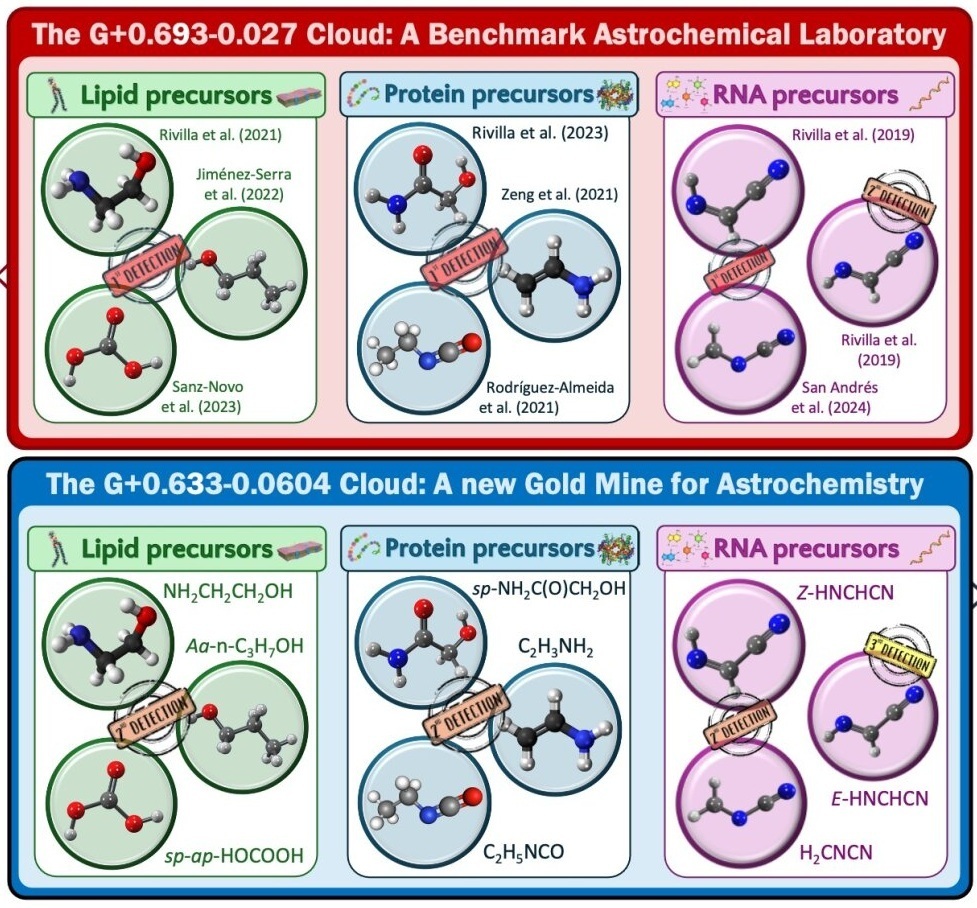
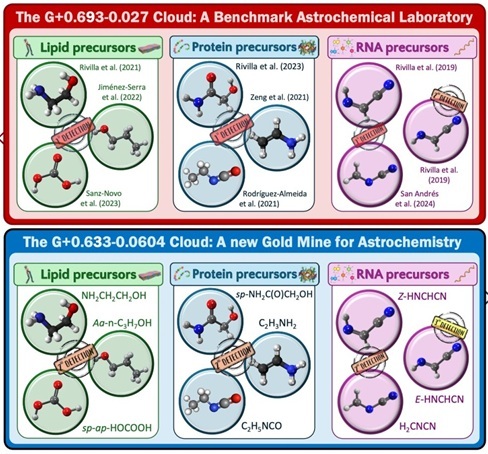 Complex organics in space continue to make the news. The latest examples come from a molecular cloud near the center of the Milky Way galaxy. As usual, they are said to be prebiotic. Why does no one seem to notice that the complex organics might be postbiotic, degraded by long exposure in space?
"More than 120 molecular species found in giant cloud near Milky Way's center," by Shreejaya Karantha, PhysOrg.com, 02 Sep 2026; re:
"The Galactic Centre G+0.633-0.0604 Molecular Cloud: A New Gold Mine for Astrochemistry," by D. San Andrés et al, arXiv:2608.14381, 18 Aug 2026.
Hoyle and Wickramasinghe's Analysis of Interstellar Dust (begun in the 1960s) has history, updates, references and selected resources.
 Viruses are increasingly viewed not simply as thieves of cellular genes but as reservoirs and brokers of genetic novelty, participants in an ongoing exchange that has shaped the evolution of cells themselves.
"Large DNA viruses carry their own membrane remodelling machinery," by Juliet Wilcox, Scencemag +Bioengineer, 29 Aug 2026; re:
"Large eukaryotic DNA viruses encode ESCRT machinery for membrane remodelling," by S. Medvedeva, U. Guyet, E.V. Koonin et al, Nat Microbiol, 26 Aug 2026.
Thanks, Google Alerts.
Viruses... has a primer and many links about their role in evolution.
"Transposon-colonized intron gain follows parasitism-mediated horizontal transfer of a cytochrome P450 gene," by Eiichiro Ono et al, doi: 10.1093/plphys/kiag335, Plant Physiology, 02 Jun 2026; and comments:
"Parasitic plants act like genetic engineers by stealing and remodeling useful genes," Osaka Metropolitan University via EurekAlert!, 27 Aug 2026.
Thanks, Google Alerts.
Viruses and Other Gene Transfer Mechanisms has links to many examples of HGT in all kingdoms.
Robust Software Management discusses mechanisms capable of completing the observed genetic enginering.
How does life make its evolutionary innovations? Where does new genetic programming comes from? Where does meaning come from? How can meaning be measured? I have tried to pursue variants of this question for decades. Today, on a whim, I asked an AI agent, Claude, "How do you measure meaning?"
My chat with Claude was far deeper and more interesting than I anticipated. Claude began by listing several kinds of meaning, and within "linguistic meaning," three subsets, of which Shannon's was one (except it omits meaning.) After more discussion Claude began to understand my question. Claude surprised me by referencing some unfamiliar sources, and others I know, like Christoph Adami, Robert Hazen and Richard Lenski.
From there, we began to discuss what a closed or quarantined system would entail, and how it could help to probe the question. I pointed out that gene and gemome duplications allow the number of possibilities, "N," to expand without limit. And I pointed out that bacteria can swap genes, so HGT is possible in quarantine. The transcribed part of the chat picks up there. It is well worth reading. The cosmic ancestry webpages that pertain to the discussion are too numerous to list.
25 Aug 2026: AI agent Claude answers a question.
"Antarctic bacteria share 'life-support' genes to survive extreme conditions," by Yongyi Peng and Ry Holland, Monash University via The Conversation, 23 Aug 2026; re:
"Widespread horizontal transfer and strong selection enhance microbial adaptation in Antarctic soils," by Peng, Y., Woods, L.C., Perlaza-Jimenez, L. et al, doi:10.1038/s41467-026-76323-8, Nat Commun, early access via ReadCube, online 11 Aug 2026.
Widespread HGT within microbial communities is dominated by energy metabolism genes.
Thanks, Google Alerts.
How Prokaryotes Evolve is already well-observed, but this example is noteworthy.
Bacteria... has more about their survival capabilities.
"Gene ancestries reveal diverse microbial associations during eukaryogenesis," by Bernabeu, M., Manzano-Morales, S., Marcet-Houben, M., et al, Nature, 13 Aug 2026.
Taken together, our results ...support a paradigm shift towards more gradual scenarios in which the prokaryotic-to-eukaryotic transition was achieved through serial interactions with a diverse range of bacterial partners, leading to substantial gene transfer, with viruses playing a part as mediators.
16 Sep 2024: a related review (illustrating endosymbiosis as a singular event.)
Viruses and Other Gene Transfer Mechanisms has links to many examples of HGT in all kingdoms.
Panspermia is getting welcome attention from Harvard astronomer Avi Loeb and associates. Specific questions get deeply focussed research from his department there, and Loeb posts wide-ranging speculations on his personal blog.
"Galactic panspermia by interstellar objects: Source populations, biosignature survival, and planetary delivery," by Shokhruz Kakharov and Abraham Loeb, posted by Harvard (manusipt intended for Astronomy & Astrophysics), 13 Aug 2026.
The purpose of this work is to identify which Galactic populations can supply potential panspermia carriers and which physical step most strongly limits their delivery.
"Could Interstellar Objects Transfer Life Between Stars?" by Abraham Loeb on Medium.com, 13 Aug 2026.
04 Feb 2026: a paper about outgassing from Comet 3I after perihelion, and Loeb's comments.
Comets: The Delivery System has background and references.
...Interstellar Dust introduces Hoyle and Wickramasinghe's study of panspermia beginning in the 1960s.
How is it Possible? with early speculatons about intentional panspermia and engineered microbial genomes.
 Viruses evolve even more rapidly than bacteria. Where do their evolutionary innovations come from? A new open-access analysis in PNAS (about the topology of gene-sharing networks in viruses) deals directly with this question. Under the heading "Functional Innovation," the entire paragraph reads, New genes, originated in an external and—to all purposes—unlimited pool, can be incorporated into a genome via HGT.
The next heading, "Organismal Innovation," contains a short paragraph with these words: ...Every genome includes a set of essential genes ...for example, the conserved morphogenetic toolbox in DNA viruses or the RNA-dependent RNA polymerase in RNA viruses. ...The emergence of a new genome can be perceived as capture of a new gene on top of that immutable core.
In this account, that's the whole story of evolutionary innovation among viruses. For evolutionary innovation — in all of life — the basic principles of cosmic ancestry could hardly be stated more succinctly.
"A generative model for bipartite gene-sharing networks," by Jaime Iranzo et al, PNAS | epub, 29 Jul 2026. The authors are four interdisciplinary scientists (including an astrobiologist) from Spain, and Eugene Koonin of NIH.
April 9, 2000: Origin and Evolution of Viruses, by Luis P. Villarreal includes surprising ideas.
The evolution of acquired characteristics, a/k/a Lamarckism, is a respectable, viable theory, according to Australian immunologist Ted Steele and associates. In a new article with >100 references, they review the subject in depth, and pursue it with surprising insights. Having spent decades studying it, Steele hopes research and testing will expand.
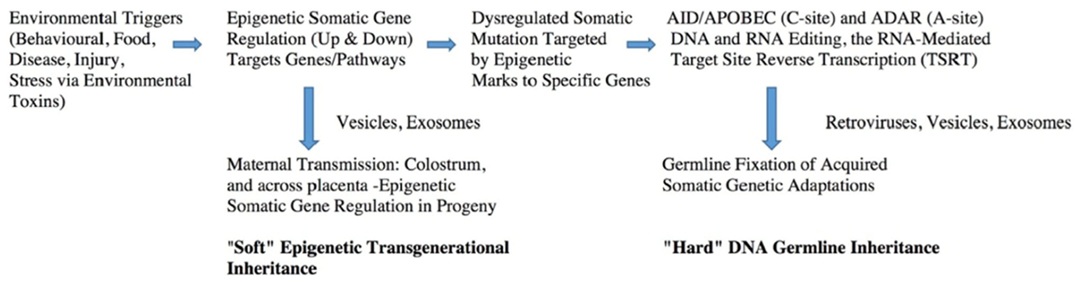
To me, "Epigenetic–Genetic Coupling and the Transition from 'Soft' to 'Hard' Lamarckian Inheritance" (illustrated) was the most unfamiliar aspect of the review. But even that cannot account for the inventiveness of longterm macroevolution — the examples given showed only adaptive microevolution. Some examples, like instinctive behavior, are especially intriguing. In an interview, Steele admits that straightforward Darwinian selection is adequate for eliminating the unfit, but says it cannot explain the rapidity of evolution. Right. Nor the inventiveness. But inventions can reach the "Hard" DNA Germline by HGT, following viral infection, for example. Steele knows this, too.
Epigenetic-Genetic Coupling and Understanding the Molecular and Cellular Basis of Lamarckian Inheritance, by Robyn A. Lindley, Reginald M. Gorczynski and Edward J. Steele, Int. J. Mol. Sci., 20 Feb 2026; and discussion:
 Was Lamarck right about evolution? Robyn Chuter with Ted Steele, 85-min interview, 24 Jul 2026. Was Lamarck right about evolution? Robyn Chuter with Ted Steele, 85-min interview, 24 Jul 2026.
12 May 1999: our review of Lamarck's Signature, by Steele et al., with linked discussion.
Neo-Darwinism: The Current Paradigm has history
26 Jul 2026: Ted Steele replies with thoughts about panspermia. Later, with this link:
Lamarck and Panspermia - On the Efficient Spread of Living Systems Throughout the Cosmos, by Edward J. Steele et al, Progress in Biophysics and Molecular Biology, Dec 2019.
Scientists have long dreamed of discovering the alchemy by which chemicals can be turned into life. ...A team [has] taken a major step toward that vision.
These are opening words in a New York Times article describing an impressive research project at The University of Minnesota. A team there attempted to create a minimal synthetic cell by piecing together some basic, molecular parts and a few borrowed parts, like replication and transcription enzymes. They claim only partial success, but it's still noteworthy. With a genome of just 90kb, the cell can divide, take up nutrients and persist for five generations. Wth no ribosome, it cannot synthesize proteins. The project was extremely complex, and the lengthy writeup is informative. Of course they mention possible commercial or medical applications, and safety issues. I haven't digested it all. The research comes from a new initiative with support from established non-profits.
One of the most ambitious and fascinating goals of bioengineering is to build a biochemical system that could cross the threshold from chemistry to life, they write. I can imagine that as technology advances, future bologists might manufacture a complete ribosome and write all the necessary genes and eventually be able to make a cell chemically and genetically identical to a bacterium. If so, the manmade cell might get loose, swap genes with a free-living population of bacteria, and disappear into the crowd. That's life!
The origin-of-life research industry will find encouragement in this project. That is evident in the first sentence of the NYT story, and is suggested by the phrase, the threshold from chemistry to life. Yet this team doesn't mention that subject. They never suggest that any of the countless steps necessary to assemble a biological cell – or to write a bacterial genome – could happen by itself. The sheer complexity of the project reinforces my suspicion that the assumed origin-of-life is impossible. This research has other objectives.
This Cell Feeds, Grows and Reproduces. And It's Manmade. by Carl Zimmer and Marco Hernandez, The New York Times, online 01 Jul 2026; re:
A Chemically Defined Synthetic Cell Capable of Growth and Replication, by Nathaniel J. Gaut et al, (190 pages) [biotic.org: abstract with links | bioRxiv], 02 Jul 2026.
The RNA World and Other Origin-of-Life Theories has background and updates.
What Is Life? has related discussion.
13 Feb 2004: Nonliving to living? has related discussion.
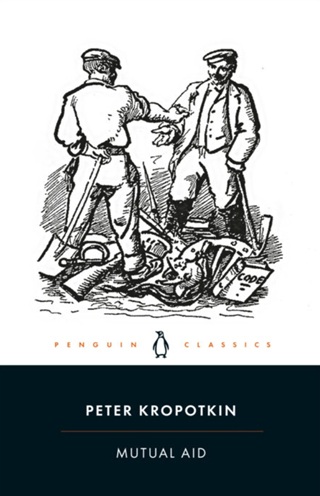 Dear Martina -- Many thanks for this book; I probably wouldn't have known of it otherwise. Of course, it resonates with me because Kropotkin argues that Darwinism doesn't explain a lot about evolution. He specifically notices the cooperation that animals, from insects to humans, naturally exhibit. His catalog of examples is almost overwhelming. (He extends his argument to include human cultural progress, with relevance to pre-Soviet Russia.)
Today, 125 years later, we know about genes and DNA; this knowledge helps us to understand much about inheritance, genetic defects, microevolution and the like. It does not explain the genetic programming that major evolutionary changes require. However, if new genes aren't really new, surprises like un-selfish evolution are much more logical. As you know, the implications for cosmic life are profound. Thanks, Martina, for knowing about Kropotkin. He was a skeptic and non-conformist who understood life intuitively, 125 years ago. He was my kind of guy.
Mutual Aid: A Factor of Evolution, by Peter Kropotkin, Introduction and Notes by David Priestland, Penguin Classics, 2022. First published, 1902.
Thanks, Martina Car and Anthony Audi.
"Horizontal gene transfer observed in human cells," by Amy McDermott, PNAS, with video, 19 Jun 2026.
Thanks, Google Alerts.
![]()
|
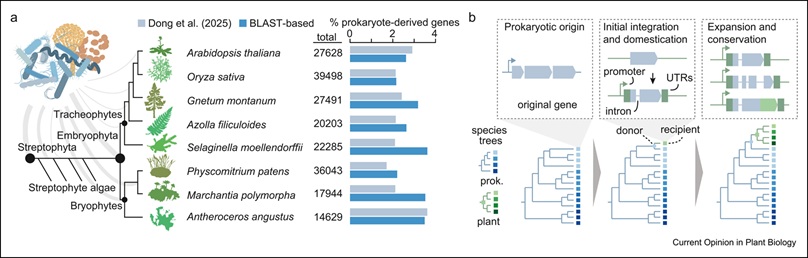 These observations suggest that HGT was, and continues to be, a major force shaping plant evolution, exemplifying the potential significance of HGT in eukaryotic biology more broadly.