| A team at the University of Oklahoma will search for uniquely human gene families and their sources. Zoologist Tom Ray, author of the artificial life program Tierra, will lead the team that conducts the research. The study seeks to discover whether Darwinism or strong panspermia accounts for the genes that make us human. Here is Ray's research plan, adopted 18 November 2001. | ||
Human Genome Search
|

 Correspondence, 2001-2005, during the establishment and pursuit of this research project. Correspondence, 2001-2005, during the establishment and pursuit of this research project.
|
By definition, "species" of higher organisms (especially animalia) are considered to be genetically closed systems. Conventional Darwinian thinking is that most or all gene families arise through gene duplication and divergence. Strong panspermia suggests that all or most gene families enter a species lineage by horizontal transfer from other species, with these new genes ultimately arriving from outer space.
The current phase of the research will have as its primary target, the quantitative estimation of the relative proportion of new genes and gene families arising by duplication/divergence or by horizontal transfer. If this work demonstrates a significant proportion of horizontal transfer, we will publish this result and acknowledge that it is surprising to Darwinians, but predicted by the strong version of panspermia. Then we will develop a new phase that considers all possible sources for the genes.
The study of the evolution of gene families will begin with a comparison of the human and mouse genomes, to identify a set of genes and gene families present in humans, but absent in mice. This will be followed by a targeted search for these gene families in every available genome between the human and mouse. This will give us the first clear picture of the process by which new gene families emerge and evolve.
Currently, there is no other genome available between the human and mouse, but we expect many to be completed in the coming years, with the greatest concentration of available genomes among the primates, which should be ideal for this study.
However, to avoid having to wait for full genomes to become available, we will attempt to raise funds for a targeted sequencing of the candidate gene families (from the human-mouse comparison), in every species between human and mouse for which BACs are available.
In spite of the limitations on the availability of genetic data, we believe that there is certainly enough data available to begin work, and maintain momentum for a year or two. If we find ourselves in the position of having to wait for data, we would reduce or suspend the funding until the relevant data becomes available.
 Tom Ray |
- The continued training of Tom Ray in the use of bioinformatic techniques
- The selection, purchase, assembly, and development of administrative skills of a new linux cluster for bioinformatic analysis
- Development of analytical protocols for addressing the questions of this study.
- a) How to define and recognize "gene families"
- b) How to compare human and mouse genomes to recognize gene families present in humans but not mice
- c) How to target the search for these gene families in the intermediate genomes as they become available
- d) How to detect the emergence of new genes and gene families by duplication and divergence
- e) How to detect the emergence of new genes and gene families by horizontal transfer
- f) How to clearly discirminate between duplication/divergence and horizontal transfer
- Application of the protocols to address the questions of this study
- a) Comparison of mouse and human genomes to identify genes and gene families present in humans but absent from mice
- b) Attempt to locate genes in the human genome which arose recently through duplication and divergence
- c) Attempt to locate genes in the human genome which arose recently through horizontal transfer
- d) Steps b and c can be repeated for any higher organism whose genome has been completed (e.g., mouse, drosophila)
While we can not make commitments for others, we hope that in the first year, a collaborative proposal can be developed and submitted, to target sequence the relevant gene families in many species.
We expect that all or most of the work described above can be started in the first year. However, it is notoriously difficult to predict research progress. Proposals tend to be ambitious, and research tends to take longer than anticipated.
If the reseach should reveal a significant frequency of horizontal gene transfer among higher organisms, we anticipate that Tom and Brig will coauthor a publication revealing this result.
What'sNEW Also see Sequencing the Genome under "Can The Theory Be Tested?"
 Structurally divergent and recurrently mutated regions of primate genomes, by Yafei Mao et al., doi:10.1016/j.cell.2024.01.052 (Open Access), Cell, 29 Feb 2024.
 10 Nov 2023: ...much of the "dark matter" transcriptome may be a by-product, or even an expected component, of the regulation of known genes, as well as a source of novel genetic entities.
Human TKTL1 implies greater neurogenesis in frontal neocortex of modern humans than Neanderthals, by Anneline Pinson et al., doi:10.1126/science.abl6422, Science, 09 Sep 2022; and commentary by Carl Zimmer, The New York Times, 08 Sep 2022. It's remarkable that such a small change has such a dramatic effect on the production of neurons, says neuroscientist Laurent Nguyen.
16 May 2022: The gene regulatory network controlling the development of germ cells may have been rewired by ERV insertions during hominoid evolution.
The essential but enigmatic regulatory role of HERVH in pluripotency, by Corinne E. Sexton, Richard L. Tillett and Mira V. Han, doi:10.1016/j.tig.2021.07.007, Trends in Genetics, 01 Jan 2022.
Evolutionary impact of chimeric RNAs on generating phenotypic plasticity in human cells, by Sumit Mukherjee and Milana Frenkel-Morgenstern, doi:10.1016/j.tig.2021.08.015, Trends in Genetics, 01 Jan 2022. ...the findings of this study suggest that the appearance of chimeric RNAs at the transcriptional level could provide a mechanism that allows the testing of functionality before such chimera-encoding sequences are fixed into the genome.
An ancestral recombination graph of human, Neanderthal, and Denisovan genomes by Nathan K. Schaefer et al., doi:10.1126/sciadv.abc0776, Science Advances, 16 Jul 2021.
...we find that a low fraction, 1.5 to 7%, of the human genome is uniquely human.... This small human-specific fraction of the genome is enriched for genes related to neural development and function.
Higher Rates of Processed Pseudogene Acquisition in Humans and Three Great Apes Revealed by Long-Read Assemblies by Xiaowen Feng and Heng Li, doi:10.1093/molbev/msab062, Mol. Biol. and Evol., Jul 2021.
...brain protein-coding genes under positive selection during primate evolution... by Guillaume Dumas et al., doi:10.1101/gr.262113.120, Genome Res., online 13 Jan 2021.
We describe here an exhaustive screening of all protein-coding genes for conservation and divergence from the common primate ancestor, making use of rich data sets of brain single-cell transcriptomics, proteomics, and imaging to investigate the relationships between these genes and brain structure, function, and diseases. ...We confirm that genes encoding brain-related proteins are among the most strongly conserved protein-coding genes in the human genome. ...Conversely, [indirect evidence suggests that] a number of DNA damage response genes ...show strong signs of positive selection and might have played a role in human brain size expansion during primate evolution.
Cooperative evolution of two different TEs results in lineage-specific novel transcripts in the BLOC1S2 gene by Hyeon-Mu Cho et al., BMC Evolutionary Biology, 30 Oct 2019. the MIR element integrated into the genome of our common ancestor before the radiation of all primate lineages and the AluSp element integrated into the genome after the divergence of Old World monkeys and New World monkeys. ...sequences for the intron removal process are provided by the combination. Evidence that RNA Viruses Drove Adaptive Introgression between Neanderthals and Modern Humans by David Enard and Dmitri A. Petrov, doi:10.1016/j.cell.2018.08.034, Cell, 04 Oct 2018. 01 Jun 2018: New genes increase the size of the human brain. A Surprise Source of Life's Code by Emily Singer, Quanta Magazine (+Scientific American), 18 Aug 2015. Of the 600 human-specific genes that [evolutionary biologist Mar] Albà's team found, 80 percent are entirely new, having never been identified before. 27 Sep 2017: ...multiple waves of LINE retrotransposition and the birth of new mobile elements during primate evolution, and their impact on the evolving human brain. Transposable elements are the primary source of novelty in primate gene regulation by Marco Trizzino et al., doi:10.1101/gr.218149.116, Genome Res., online 30 Aug 2017. Impacts of Neanderthal-Introgressed Sequences on the Landscape of Human Gene Expression, by Rajiv C. McCoy, Jon Wakefield, Joshua M. Akey, doi:10.1016/j.cell.2017.01.038, Cell, 23 Feb 2017.
09 Apr 2016: The human reference genome contains over 120 HML-2 [endogenous retrovirus] insertions that are not present in chimpanzees, bonobos, or gorillas.
10 Mar 2016: Viruses... have had a significant impact on the evolution of all organisms, from bacteria to humans. 03 Mar 2016: ...These viral fossils probably played a key role in the evolution of our species.... Introgression of Neandertal- and Denisovan-like Haplotypes Contributes to Adaptive Variation in Human Toll-like Receptors, by Michael Dannemann, Aida M. Andrés and Janet Kelso, doi:10.1016/j.ajhg.2015.11.015, The American Journal of Human Genetics, Jan 2016. 4 Sep 2015: ...Thousands of transcripts ...which are likely to have originated de novo....
10 Nov 2023: ...much of the "dark matter" transcriptome may be a by-product, or even an expected component, of the regulation of known genes, as well as a source of novel genetic entities.
Human TKTL1 implies greater neurogenesis in frontal neocortex of modern humans than Neanderthals, by Anneline Pinson et al., doi:10.1126/science.abl6422, Science, 09 Sep 2022; and commentary by Carl Zimmer, The New York Times, 08 Sep 2022. It's remarkable that such a small change has such a dramatic effect on the production of neurons, says neuroscientist Laurent Nguyen.
16 May 2022: The gene regulatory network controlling the development of germ cells may have been rewired by ERV insertions during hominoid evolution.
The essential but enigmatic regulatory role of HERVH in pluripotency, by Corinne E. Sexton, Richard L. Tillett and Mira V. Han, doi:10.1016/j.tig.2021.07.007, Trends in Genetics, 01 Jan 2022.
Evolutionary impact of chimeric RNAs on generating phenotypic plasticity in human cells, by Sumit Mukherjee and Milana Frenkel-Morgenstern, doi:10.1016/j.tig.2021.08.015, Trends in Genetics, 01 Jan 2022. ...the findings of this study suggest that the appearance of chimeric RNAs at the transcriptional level could provide a mechanism that allows the testing of functionality before such chimera-encoding sequences are fixed into the genome.
An ancestral recombination graph of human, Neanderthal, and Denisovan genomes by Nathan K. Schaefer et al., doi:10.1126/sciadv.abc0776, Science Advances, 16 Jul 2021.
...we find that a low fraction, 1.5 to 7%, of the human genome is uniquely human.... This small human-specific fraction of the genome is enriched for genes related to neural development and function.
Higher Rates of Processed Pseudogene Acquisition in Humans and Three Great Apes Revealed by Long-Read Assemblies by Xiaowen Feng and Heng Li, doi:10.1093/molbev/msab062, Mol. Biol. and Evol., Jul 2021.
...brain protein-coding genes under positive selection during primate evolution... by Guillaume Dumas et al., doi:10.1101/gr.262113.120, Genome Res., online 13 Jan 2021.
We describe here an exhaustive screening of all protein-coding genes for conservation and divergence from the common primate ancestor, making use of rich data sets of brain single-cell transcriptomics, proteomics, and imaging to investigate the relationships between these genes and brain structure, function, and diseases. ...We confirm that genes encoding brain-related proteins are among the most strongly conserved protein-coding genes in the human genome. ...Conversely, [indirect evidence suggests that] a number of DNA damage response genes ...show strong signs of positive selection and might have played a role in human brain size expansion during primate evolution.
Cooperative evolution of two different TEs results in lineage-specific novel transcripts in the BLOC1S2 gene by Hyeon-Mu Cho et al., BMC Evolutionary Biology, 30 Oct 2019. the MIR element integrated into the genome of our common ancestor before the radiation of all primate lineages and the AluSp element integrated into the genome after the divergence of Old World monkeys and New World monkeys. ...sequences for the intron removal process are provided by the combination. Evidence that RNA Viruses Drove Adaptive Introgression between Neanderthals and Modern Humans by David Enard and Dmitri A. Petrov, doi:10.1016/j.cell.2018.08.034, Cell, 04 Oct 2018. 01 Jun 2018: New genes increase the size of the human brain. A Surprise Source of Life's Code by Emily Singer, Quanta Magazine (+Scientific American), 18 Aug 2015. Of the 600 human-specific genes that [evolutionary biologist Mar] Albà's team found, 80 percent are entirely new, having never been identified before. 27 Sep 2017: ...multiple waves of LINE retrotransposition and the birth of new mobile elements during primate evolution, and their impact on the evolving human brain. Transposable elements are the primary source of novelty in primate gene regulation by Marco Trizzino et al., doi:10.1101/gr.218149.116, Genome Res., online 30 Aug 2017. Impacts of Neanderthal-Introgressed Sequences on the Landscape of Human Gene Expression, by Rajiv C. McCoy, Jon Wakefield, Joshua M. Akey, doi:10.1016/j.cell.2017.01.038, Cell, 23 Feb 2017.
09 Apr 2016: The human reference genome contains over 120 HML-2 [endogenous retrovirus] insertions that are not present in chimpanzees, bonobos, or gorillas.
10 Mar 2016: Viruses... have had a significant impact on the evolution of all organisms, from bacteria to humans. 03 Mar 2016: ...These viral fossils probably played a key role in the evolution of our species.... Introgression of Neandertal- and Denisovan-like Haplotypes Contributes to Adaptive Variation in Human Toll-like Receptors, by Michael Dannemann, Aida M. Andrés and Janet Kelso, doi:10.1016/j.ajhg.2015.11.015, The American Journal of Human Genetics, Jan 2016. 4 Sep 2015: ...Thousands of transcripts ...which are likely to have originated de novo....  4 Jan 2016. Rachel M. Gittelman et al., "Comprehensive identification and analysis of human accelerated regulatory DNA" [abstract], doi:10.1101/gr.192591.115, Genome Res., 23 Jun 2015. Elizabeth Pennisi, "Of mice and men" [summary], doi:10.1126/science.349.6243.21, Science, 3 Jul 2015. Fernando Racimo et al., "Evidence for archaic adaptive introgression in humans" [abstract], doi:10.1038/nrg3936, Nature Reviews Genetics, online 12 May 2015; and commentary by Svante Pääbo, "The diverse origins of the human gene pool" [abstract], doi:10.1038/nrg3954, Nature Reviews Genetics, online 18 May 2015. Wigard P. Kloosterman, Laurent C. Francioli et al., "Characteristics of de novo structural changes in the human genome" [abstract], doi:10.1101/gr.185041.114, Genome Res., online 16 Apr 2015. 12 Mar 2015: We argue that HGT has occurred, and continues to occur, on a previously unsuspected scale in metazoans.... — Crisp, Boschetti et al. 13 Jan 2015: ...Inherited viruses that are millions of years old play an important role in building up the complex networks that characterise the human brain. 26 Sep 2014: 23,849 anthropoid-specific constrained (ASC) regions with "robust functional signatures" Lucia Carbone et al., "Gibbon genome and the fast karyotype evolution of small apes" [html], doi:10.1038/nature13679, p 195-201 v 513, Nature, Sep 2014. "...The propensity for a gibbon-specific retrotransposon (LAVA) to insert into chromosome segregation genes and alter transcription...." 9 Jan 2014: ...At a key point in great ape evolution, there was a burst in retroviral activity — Edward Hollox Genetic switches play big role in human evolution, Cornell University, 11 Jun 2013. Lei Shi et al., "Functional divergence of the brain-size regulating gene MCPH1 during primate evolution and the origin of humans" [html], doi:10.1186/1741-7007-11-62, n62 v11, BMC Biology, 22 May 2013. 11 May 2013: ...TEs, and in particular ERVs, have contributed hundreds of thousands of novel regulatory elements to the primate lineage.... 'Master Gene' Makes Mouse Brain Look More Human by Emily Underwood, Science, 25 Apr 2013. "Researchers have now found a genetic mutation that causes mammalian neural tissue to expand and fold." Pedro Miura, Sol Shenker et al., "Widespread and extensive lengthening of 3' UTRs in the mammalian brain" [abstract], doi:10.1101/gr.146886.112, Genome Res., online 21 Mar 2013. Yuval Itan et al., "The human gene connectome as a map of short cuts for morbid allele discovery" [abstract], doi:10.1073/pnas.1218167110, PNAS, online 18 Mar 2013; and commentary: Researchers create map of 'shortcuts' between all human genes, The Rockefeller University via Eurekalert, 21 Mar 2013. 23 Nov 2012: Some regulatory sequences in the human genome have no identifiable orthologs in chimpanzee, gorilla, orangutan, rhesus macaque, marmoset, or any of six other species investigated. Sankararaman S, Patterson N, Li H, Pääbo S, Reich D, "The Date of Interbreeding between Neandertals and Modern Humans" [html], doi:10.1371/journal.pgen.1002947, 8(10): e1002947, PLoS Genet., 4 Oct 2012. 6 Sep 2012: Almost 80% of the genome is biochemically active.... Xiling Liu, Mehmet Somel, Lin Tang et al., "Extension of cortical synaptic development distinguishes humans from chimpanzees and macaques" [Open Access abstract], doi:10.1101/gr.127324.111, p611-622 v22, Genome Res., 2 Feb 2012. And commentary: "What's a man?" [html], The Economist, 4 Feb 2012. 24 Mar 2012: ...The contribution of EVEs to cellular function... is exceeding even the boldest predictions. — Cédric Feschotte and Clément Gilbert Aylwyn Scally et al., "Insights into hominid evolution from the gorilla genome sequence" [abstract], doi:10.1038/nature10842, p169-175 v483, Nature, 8 Mar 2012. Nicholas A. Johnson et al., "Ancestral Components of Admixed Genomes in a Mexican Cohort" [html], doi:10.1371/journal.pgen.1002410, e1002410 v7 n12, PLoS Genet, Dec 2011. 19 Nov 2011: Where do new genes come from? Nalini Polavarapu et al., "Characterization and potential functional significance of human-chimpanzee large INDEL variation" [abstract], doi:10.1186/1759-8753-2-13, v2 n13, Mobile DNA, online 25 Oct 2011. And commentary: 'Junk DNA' Defines Differences Between Humans and Chimps, Georgia Institute of Technology via ScienceDaily, 25 Oct 2011. Laurent Abi-Rached et al., "The Shaping of Modern Human Immune Systems by Multiregional Admixture with Archaic Humans" [abstract], doi:10.1126/science.1209202, p89-94 v334, Science, 7 Oct (online 25 Aug) 2011. 24 Oct 2011: New genes are preferentially expressed in the early development of the human brain.
 Evolution's Past Is Modern Human's Present, Press Release 11-181, The National Science Foundation, 6 Sep 2011. 26 Aug 2011: ...Adaptive introgression of archaic alleles has significantly shaped modern human immune systems. 23 Jul 2011: Transposable Elements (TEs) appear to have installed genetic programs implicated in 99 different primate-specific traits. Vania Yotova et al., "An X-Linked Haplotype of Neandertal Origin Is Present Among All Non-African Populations" [abstract], doi:10.1093/molbev/msr024, p1957-1962 v28, Molecular Biology and Evolution, Jul 2011. Mario Ventura et al., "Gorilla genome structural variation reveals evolutionary parallelisms with chimpanzee" [abstract], doi:10.1101/gr.124461.111, Genome Research, online 17 Jun 2011. Ying-fu Zhong and Peter W H Holland, "The dynamics of vertebrate homeobox gene evolution: gain and loss of genes in mouse and human lineages" [abstract], doi:10.1186/1471-2148-11-169, v11 n169, BMC Evolutionary Biology, online 16 Jun 2011. Ryan E. Mills et al., "Natural genetic variation caused by small insertions and deletions in the human genome" [abstract], doi:10.1101/gr.115907.110, Genome Res., online 10 Apr 2011. Mason Liang and Rasmus Nielsen, "Q&A: Who is H. sapiens really, and how do we know?" [html], doi:10.1186/1741-7007-9-20, v9 n20, BMC Biology, 31 Mar 2011. Cory Y. McLean at al., "Human-specific loss of regulatory DNA and the evolution of human-specific traits" [abstract], doi:10.1038/nature09774, p216-219 v471, Nature, 10 Mar 2011. Ajit Varki and Tasha K. Altheide, "Comparing the human and chimpanzee genomes: Searching for needles in a haystack" [abstract], doi:10.1101/gr.3737405, p1746-1758 v15, Genome Research, Dec 2005. "...~50 known or predicted human genes were found to be missing partially or entirely in the chimpanzee genome." Ryan D. Hernandez et al., "Classic Selective Sweeps Were Rare in Recent Human Evolution" [abstract], doi:10.1126/science.1198878, p921-924 v331 Science, 18 Feb 2011. "...In the search for targets of human adaptation, a change in focus is warranted." 18 Feb 2011: A virus integrated into the genomes of humans and great ape males helps to eliminate defective germline cells. Shihao Shen, Lan Lin et al., "Widespread establishment and regulatory impact of Alu exons in human genes" [abstract], doi:10.1073/pnas.1012834108, PNAS, online 31 Jan 2011. 21 Nov 2010: The human genome contains about 1.8 million recognizable Alu sequence residues.... They are now seen as having much structural and evolutionary significance — Roy Britten James P. Noonan, "Neanderthal genomics and the evolution of modern humans" [abstract], doi:10.1101/gr.076000.108, p547-553 v20, Genome Research, 20 May 2010. Rex Dalton, "Ancient DNA set to rewrite human history" [abstract], doi:10.1038/465148a, p148-149 v465, Nature, online 12 May 2010. Richard E. Green et al., "A Draft Sequence of the Neandertal Genome" [abstract], doi:10.1126/science.1188021, p710-722 v328, Science, 7 May 2010. Nicholas Wade, "Signs of Neanderthals Mating With Humans" [html], pA10, The New York Times, 7 May 2010. Rex Dalton, "European and Asian genomes have traces of Neanderthal" [html], doi:10.1038/news.2010.225, Nature, online 6 May 2010. How We Lost Our Diversity, by Ann Gibbons, ScienceNOW Daily News, 8 Oct 2009. "...In two dramatic bottlenecks...." Macarena Toll-Riera, et al., "Origin of Primate Orphan Genes: A Comparative Genomics Approach" [abstract], doi:10.1093/molbev/msn281, p603-612 v26, Mol. Biol. Evol., online Dec 2008. "...270 primate orphan genes.... [T]he data support the current annotation of these genes as protein-coding genes." Ana Claudia Marques et al., "Emergence of Young Human Genes after a Burst of Retroposition in Primates" [article], doi:10.1371/journal.pbio.0030357, PLoS Biol 3(11): e357, 11 Oct 2005. Annette Damert et al., "5'-Transducing SVA retrotransposon groups spread efficiently throughout the human genome" [article], doi:10.1101/gr.093435.109, Genome Research, online 3 Aug 2009. Valery A. Shepelev et al., "The Evolutionary Origin of Man Can Be Traced in the Layers of Defunct Ancestral Alpha Satellites Flanking the Active Centromeres of Human Chromosomes" [article], doi:10.1371/journal.pgen.1000641, e1000641 v5 n9 PLoS Genetics, Sep 2009. Three New Human Genes is a new related webpage, posted 4 Sep 2009. Elie Dolgin, "Human mutation rate revealed" [html], doi:10.1038/news.2009.864, Nature, online 27 Aug 2009. "...one mutation in every 30 million base pairs...." 23 Jul 2009: Primate-specific genes were inserted de novo, not generated by gradual divergence from non-primate genes. Feng Zhang et al., "The DNA replication FoSTeS/MMBIR mechanism can generate genomic, genic and exonic complex rearrangements in humans" [abstract], doi:10.1038/ng.399, p 849-853 v 41, Nature Genetics, online 21 Jun 2009. Takeshi Kawashima et al., "Domain shuffling and the evolution of vertebrates" [abstract], doi:10.1101/gr.087072.108, Genome Research, online 14 May 2009. Jinchuan Xing et al., "Mobile elements create structural variation: analysis of a complete human genome" [abstract], doi:10.1101/gr.091827.109, p 1516-1526 v 19, Genome Research, 1 Sep (online 13 May) 2009. "...Demonstrates that mobile elements play an important role in generating inter-individual structural variation." Katherine S. Pollard, "What Makes Us Human?" [preview], p 44-49 v 300, Scientific American, May 2009. Ran Blekhman et al., "Segmental Duplications Contribute to Gene Expression Differences Between Humans and Chimpanzees " [link], doi:10.1534/genetics.108.099960, Genetics, online 30 Mar 2009. Elizabeth Pennisi, "Neanderthal Genomics: Tales of a Prehistoric Human Genome" [summary], doi:10.1126/science.323.5916.866, p 866-871 v 323, Science, 13 Feb 2009. Rex Dalton, "Neanderthal genome to be unveiled" [html], doi:10.1038/457645a, p 645 v 457, Nature, online 4 Feb 2009. Santhosh Girirajan et al., "Sequencing human-gibbon breakpoints of synteny reveals mosaic new insertions at rearrangement sites" [abstract], doi:10.1101/gr.086041.108, p 178-190 v 19, Genome Research, Feb 2009 (online 24 Nov 2008). E. Andrew Bennett et al., "Active Alu retrotransposons in the human genome" [abstract], doi:10.1101/gr.081737.108, p 1875-1883 v 18, Genome Research, Dec (online 3 Oct) 2008. [copy number variants (CNVs) in humans and chimps], by Jon Cohen, ScienceNOW Daily News, 7 Nov 2008. Human genes are multitaskers, by Heidi Ledford, doi:10.1038/news.2008.1199, NatureNews, 2 Nov 2008. Lan Lin et al., "Diverse Splicing Patterns of Exonized Alu Elements in Human Tissues" [article], doi:10.1371/journal.pgen.1000225, e1000225 v 4 n 10 PLoS Genetics, Oct 2008. UI study finds value in 'junk' DNA, University of Iowa News Release, 17 Oct 2008. Shyam Prabhakar et al., "Human-Specific Gain of Function in a Developmental Enhancer" [abstract], doi:10.1126/science.1159974, p 1346-1350 v 321, Science, 5 Sep 2008. "...a conserved noncoding sequence (HACNS1) that evolved extremely rapidly in humans.... 13 substitutions clustered in an 81–base pair module otherwise highly constrained among terrestrial vertebrates were sufficient to confer the human-specific limb expression domain [in transgenic mice]." Researchers Find Human Virus in Chimpanzees, by Jeffrey Douglas, Virginia Tech News, 4 Jun 2008. Ben-Yang Liao and Jianzhi Zhang, "Null mutations in human and mouse orthologs frequently result in different phenotypes" [abstract], doi:10.1073/pnas.0800387105, p 6987-6992 v 105, PNAS, 13 May (online 5 May) 2008. "...We find that >20% of human essential genes have nonessential mouse orthologs." Jeffrey M. Kidd et al., "Mapping and sequencing of structural variation from eight human genomes" [abstract], doi:10.1038/nature06862, p 56-64 [also commentary by Evan Eichler, p xii] v 453, Nature, 1 May 2008. Graham Coop et al., "High-Resolution Mapping of Crossovers Reveals Extensive Variation in Fine-Scale Recombination Patterns Among Humans" [abstract], doi:10.1126/science.1151851, p 1395-1398 v 319, Science, 7 Mar (online 31 Jan) 2008. "...Recombination rates vary tremendously across the human genome, with most events occurring in narrow 'hotspots.'" Elliott H. Margulies and Ewan Birney, "Approaches to comparative sequence analysis: towards a functional view of vertebrate genomes" [open access login], doi:10.1038/nrg2185, p 303-313 v 9, Nature Reviews Genetics, Apr 2008. Human Evolution Is Speeding Up, by Ann Gibbons, ScienceNow Daily News, 10 Dec 2007. Michele Clamp et al., "Distinguishing protein-coding and noncoding genes in the human genome" [abstract], 10.1073/pnas.0709013104, PNAS, online 26 Nov 2007. "...The results indicate that there has been relatively little true innovation in mammalian protein-coding genes." 19 Nov 2007: Ancient retroviruses spurred evolution of gene regulatory networks in humans and other primates. Adam Siepel et al., "Targeted discovery of novel human exons by comparative genomics" [abstract], 10.1101/gr.7128207, Genome Research, online 7 Nov 2007. "Despite these challenges, we have found evidence for thousands of novel exons corresponding to hundreds of genes." Jan E. Janecka et al., "Molecular and Genomic Data Identify the Closest Living Relative of Primates" [abstract], 10.1126/science.1147555, p 792-794 v 318, Science, 2 Nov 2007. 25 Oct 2007: You can think of the genome as a revolving door—genes keep coming and going — Matthew W. Hahn Thomas R. Gingeras, "Origin of phenotypes: Genes and transcripts" [abstract | PDF], p 682-690 v 17, Genome Research, 6 Jun 2007. "...Transcripts may be used to define the operational unit of a genome." Erika Check, "Help flies in for human genome" [text], 10.1038/447361a, Nature, online 23 May 2007. "Genes are regulated by complicated networks that span huge portions of the genome...and... scientists don't fully understand some of the regulatory motifs that they have been studying for years." Elizabeth Pennisi, "Working the (Gene Count) Numbers: Finally, a Firm Answer?" [summary], p 1113 v 316, Science, 25 May 2007. "The real answer is 20,488 [human genes] ...with perhaps 100 more yet to be discovered." Human evolution, radically reappraised, World Science, 26 Mar 2007. "...The origin is still ongoing." Margaret A. Bakewell et al., "More genes underwent positive selection in chimpanzee evolution than in human evolution" [abstract], 10.1073/pnas.0701705104, PNAS, online 20 Apr 2007. The origin of the brain lies in a worm, European Molecular Biology Laboratory, 20 Apr 2007. "Researchers discover that the centralised nervous system of vertebrates is much older than expected."
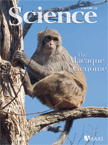 "Special Online Collection: The Macaque Genome" [link], v 316, Science, 13 Apr 2007. 29 Mar 2007: I felt sick to my stomach.... — Jonathan Eisen Chris P. Ponting and Gerton Lunter, "Human brain gene wins genome race" [PDF], p 149-150 v 443, Nature, 14 Sep 2006. John K. Pace, II and Cédric Feschotte, "The evolutionary history of human DNA transposons: Evidence for intense activity in the primate lineage" [abstract], 10.1101/gr.5826307, Genome Research, online 5 Mar 2007. 31 Dec 2006: Many genes once thought to be unique to humans have been in the tree of life for over a half billion years. Human-chimp genetic difference is as big as 6 percent, EurekAlert!, 21 Dec 2006. Richard E. Green et al., "Analysis of one million base pairs of Neanderthal DNA" [abstract], 10.1038/nature05336, p 330-336 v 444 Nature, 16 Nov 2006. 28 Nov 2006: Did the acquisition of an advantageous gene improve human brains? Neandertal DNA Comes to Life, by Elizabeth Pennisi, ScienceNOW Daily News, 15 Nov 2006. Decoded sea urchin genome shows surprising relationship to man, EurekAlert!, 9 Nov 2006. Feng-Chi Chen et al., "Human-specific insertions and deletions inferred from mammalian genome sequences" [abstract], 10.1101/gr.5429606, Genome Research, online 9 Nov 2006. 15 Sep 2006: Tom Ray replies to our open email of 31 Dec 2005. Erika Check, "Mix and match: the hunt for what makes us human" [text], 10.1038/443008a, p 8-9 v 443, Nature, 7 Sep 2006. Multiple copies of a mystery gene may make us human, doi:10.1038/news060828-5, by Erika Check, News@Nature.com, 31 Aug 2006. Ryan E. Mills et al., "An initial map of insertion and deletion (INDEL) variation in the human genome" [abstract], 10.1101/gr.4565806, Genome Research, online 10 Aug 2006. Geneticists shoot for Neanderthal genome in two years, doi:10.1038/news060717-13, by Rex Dalton and Nicola Jones, News@Nature.com, 20 Jul 2006. Nick Patterson et al., "Genetic evidence for complex speciation of humans and chimpanzees" [abstract], 10.1038/nature04789, p 1103-1108 v 441, Nature, 28 Jun (online 17 May) 2006. Jeffrey A. Bailey and Evan E. Eichler, "Primate segmental duplications: crucibles of evolution, diversity and disease" [executive summary], 10.1038/nrg1895, p 552-564 v 7, Nature Reviews Genetics, July 2006. Elizabeth Pennisi, "Genomes Throw Kinks in Timing of Chimp-Human Split" [summary], p 985 v 312, Science, 19 May 2006. Chimpanzee study reveals genome variation hotspots, EurekAlert!, 16 May 2006. 4 May 2006: A gene captured from a mobile element fused with another gene to make a new primate gene. Gaby G. M. Doxiadis et al., "Reactivation by exon shuffling of a conserved HLA-DR3-like pseudogene segment in a New World primate species" [abstract], 10.1073/pnas.0600643103, p 5864-5868 v 103, PNAS, 11 Apr (online 31 Mar) 2006. Most Human Chimp Differences Due To Gene Regulation Not Genes, TerraDaily.com, 9 Mar 2006. Nicholas Wade, "Still Evolving, Human Genes Tell New Story" [link], The New York Times, 7 Mar 2006. Natalay Kouprina, Adam Pavlicek, Ganeshwaran H. Mochida, et al., "Accelerated Evolution of the ASPM Gene Controlling Brain Size Begins Prior to Human Brain Expansion" [text: html], e126 v 2 n 5, PLoS Biol, May 2004. A. Buzdin et al., "The human genome contains many types of chimeric retrogenes generated through in vivo RNA recombination" [abstract], p 4385-4390 v 31, Nucleic Acids Research, 1 Aug 2003. "These findings suggest that RNA-RNA recombination during L1 reverse transcription followed by the integration of the recombinants into the host genome is a general event in genome evolution." 24 Feb 2006: Retroposed genes have contributed to human evolution. Researchers assemble second non-human primate genome, EurekAlert!, 9 Feb 2006. Chris Tyler-Smith et al., "The rise and fall of the ape Y chromosome?" [abstract], 10.1038/ng0206-141, p 141-143 v 38, Nature Genetics, Feb 2006. "The sequence of a second chimpanzee Y chromosome ...reveals the recent gain of one [gene] on the human lineage...."...Humans Have a Slow Molecular Clock, by Michael Balter, ScienceNOW Daily News, 23 Jan 2006. 18 Jan 2006: We hypothesize that these 'jumping genomic segments' ...[contribute] rapidly to primate gene evolution — Evan Eichler. Brig Klyce solicits Tom Ray's current opinion on the original question in an open email, 31 Dec 2005. Simon E. Fisher and Gary F. Marcus, "The eloquent ape: genes, brains and the evolution of language" [abstract], doi:10.1038/nrg1747, p 9-20 v 7, Nature Reviews Genetics, Jan 2006. "We argue that language should be viewed not as a wholesale innovation, but as a complex reconfiguration of ancestral systems...." Eric T. Wang et al., "Global landscape of recent inferred Darwinian selection for Homo sapiens" [abstract], doi:10.1073/pnas.0509691102, PNAS, online 21 Dec 2005. "...1.6% of Perlegen SNPs were found to exhibit the genetic architecture of selection." Also see the following commentary: Scoping Out Signs of Human Evolution, by Michael Balter, ScienceNOW Daily News, 20 Dec 2005. "...the team found some 1800 genes that appeared to have been under selection during the last 10,000 to 50,000 years." Ajit Varki and Tasha K. Altheide, "Comparing the human and chimpanzee genomes: Searching for needles in a haystack" [abstract], doi:10.1101/gr.3737405, p 1746-1758 v 15, Genome Research, Dec 2005. 17 Oct 2005: The principal process by which new gene functions arise is by making use of preexisting genes — Roy J. Britten 30 Sep 2005: The chimp genome has been sequenced. At least seventeen human genes contain exons missing in chimps. Robert Sean Hill and Christopher A. Walsh, "Molecular insights into human brain evolution" [abstract], doi:10.1038/nature04103, p 64-67 v 437, Nature, 1 Sep 2005. Sarah J. Wheelan, Yasunori Aizawa et al., "Gene-breaking: A new paradigm for human retrotransposon-mediated gene evolution" [abstract], doi:10.1101/gr.3688905, p 1073-1078 v 15, Genome Research, Aug (online 15 Jul) 2005. Fastest-evolving genes in humans and chimps revealed, by Jennifer Viegas, NewScientist.com, 3 May 2005. Yinqiu Wang et al., "Accelerated Evolution of the PACAP Precursor Gene During Human Origin" [abstract], doi:10.1534/genetics.105.040527, Genetics, online 16 Apr 2005. Also see "Gene Sets Humans Apart," by Mason Inman, ScienceNow, 20 Apr 2005. "...A gene called the PACAP precursor stayed substantially the same across eons, but then,... evolved at warp speed in the human lineage." Ingo Ebersberger and Matthias Meyer, "A Genomic Region Evolving Toward Different GC Contents in Humans and Chimpanzees Indicates a Recent and Regionally Limited Shift in the Mutation Pattern" [abstract], p 1240-1245 v 22 n 5, Molecular Biology and Evolution, May 2005. "...We suggest a recent and species-specific shift in the region's mutation pattern as the cause of its differing evolution in humans and chimpanzees." Duplication Makes a New Primate Gene — a new CA webpage, 21 Feb 2005. Priming the Human Primate, by Michelle Nhuch, Broad Institute, Astrobiology Magazine, 19 Feb 2005. Hominids Lose Control (synopsis), doi:10.1371/journal.pbio.0030073, by Peter D. Keightley, Martin J. Lercher and Adam Eyre-Walker, v 3 n 2, Public Library of Science: Biology, Feb 2005 (online 25 Jan). Ancestral Mammal's Genome Reconstructed, by David Grimm, ScienceNOW, 2 Dec 2004. 23 Nov 2004: Human genes composed mainly of mobile elements. 14 Nov 2004: The birth of a new gene unique to apes and humans.... Stéphanie Bertrand et al., "Evolutionary Genomics of Nuclear Receptors: From Twenty-Five Ancestral Genes to Derived Endocrine Systems" [abstract], p 1923-1937 v 21 n 10, Molecular Biology and Evolution, Oct 2004. "Our results imply that the genes for major receptors such as steroid receptors or thyroid hormone receptors were present in Urbilateria." Takashi Angata et al., "Large-scale sequencing of the CD33-related Siglec gene cluster in five mammalian species reveals rapid evolution by multiple mechanisms" [abstract], PNAS, online 26 Aug 2004. UNC research accelerates discovery of novel gene function, by Adam Shutes, UNC School of Medicine, 6 Jul 2004.
Correspondence with Tom Ray... during the establishment and pursuit of this research project, 2001-2005.
16 Apr 2004: The rat genome has been sequenced. David J. Amor et al., "Human centromere repositioning 'in progress'" [abstract], p 6542-6547 v 101, PNAS, 27 Apr 2004. Erika Check, "Geneticists study chimp–human divergence" [text], p 242 v 428 Nature, 18 Mar 2004. The Mouse Genome And The Measure of Man, National Human Genome Research Institute (NHGRI), Dec 2002. Dennis M. Wilkinson and Bernardo A. Huberman, "A method for finding communities of related genes" [abstract], PNAS online, 2 Feb 2004. Andrew G. Clark et al., "Inferring Nonneutral Evolution from Human-Chimp-Mouse Orthologous Gene Trios" [abstract], p 1960-1963 v 302, Science, 12 Dec 2003. 2003, November 20: In mammals, CNGs are more numerous and better conserved than genes. Manyuan Long, Esther Betrán, Kevin Thornton and Wen Wang, "The Origin of New Genes: Glimpses from The Young and Old" [abstract], p 865 -875 v 4, Nature Reviews Genetics, Nov 2003. Dog genome unveiled, Nature Science Update, 26 Sep 2003. W. James Kent et al., "Evolution's cauldron: Duplication, deletion, and rearrangement in the mouse and human genomes" [abstract], p 11484-11489 v 100 PNAS, 30 Sep 2003. Pioneering Study Compares 13 Vertebrate Genomes, NIH news Release, 14 Aug 2003.
Origin and Evolution of New Gene Functions [ToC], ISBN:978-1-4020-1396-6, Manyuan Long, Ed., Klewer Academic Publishers, reprinted from Genetica, 2003.
J.W. Thomas et al., "Comparative analyses of multi-species sequences from targeted genomic regions" [abstract], p 788-793 v 424 Nature, 14 Aug 2003. "...Among the primates, large indels are the principal mechanism accounting for the observed sequence differences, a finding that is consistent with other studies...."
Jinxiu Shi et al., "Divergence of the genes on human chromosome 21 between human and other hominoids and variation of substitution rates among transcription units" [abstract], PNAS, 24 Jun 2003. Tatsuya Anzai et al., "Comparative sequencing of human and chimpanzee MHC class I regions unveils insertions/deletions as the major path to genomic divergence" [text], p 7708-7713 v 100, PNAS, 24 Jun 2003.
2003, June 19: Horizontal gene transfer as a significant evolutionary driver may require an addendum to the Darwinian synthesis.
Derek E. Wildman et al., "Implications of natural selection in shaping 99.4% nonsynonymous DNA identity between humans and chimpanzees: Enlarging genus Homo" [abstract], p 7181-7188 v 100 PNAS, 10 Jun 2003. Chimps are human, gene study implies, NewScientist.com, 19 May 2003. Sean B. Carroll, "Genetics and the making of Homo sapiens" [abstract], p 849-857 v 422 Nature, 24 Apr 2003. "...A partial comparitive map indicates that there are regions of the human genome that might not be represented in chimpanzees or other apes." K.A. Frazer et al., "Genomic DNA insertions and deletions occur frequently between humans and nonhuman primates" [text], p 341-346 v 13 n 3 Genome Res., Mar 2003. Dario Boffeli et al., "Phylogenetic Shadowing of Primate Sequences to Find Functional Regions of the Human Genome" [abstract], p 1391-1394 v 299 Science, 28 Feb 2003. 2003, February 18: Humanoid gene arose abruptly? Roderic Guigó et al., "Comparison of mouse and human genomes followed by experimental verification yields an estimated 1,019 additional genes" [abstract], p 1140-1145 v 100 PNAS, 4 Feb 2003 — "Computer programs that use patterns of evolutionary conservation... to improve the accuracy of gene prediction," ScienceDaily, 5 Feb 2003. The Astrobiology Research Trust will undertake future funding of this Human Genome Search project, 01 Jan 2003. 2002, December 13: The Economist explains bioinformatics. doc: Tom Ray's review of the literature pertaining to protein evolution. Roy J. Britten, "Divergence between samples of chimpanzee and human DNA sequences is 5%, counting indels" [abstract], p 13633-13635 v 99 PNAS, 15 Oct 2002. Commentary: Human-chimp DNA difference trebled, NewScientist.com, 23 Sep 2002. "...Single base substitutions accounted for a difference of 1.4 per cent.... But [insertions and deletions] add around another 4.0 per cent to the genetic differences." Hsun-Hua Chou, et al., "Inactivation of CMP-N-acetylneuraminic acid hydroxylase occurred prior to brain expansion during human evolution" [abstract], p 11736-11741 v 99 PNAS, 3 Sep 2002. "The gene,... was mutated (knocked out) in humans in comparison with the normal, intact gene in apes," says nationalgeographic.com, 23 Aug 2002. Wolfgang Enard et al., "Molecular evolution of FOXP2, a gene involved in speech and language" [abstract], p 869-872 v 418 Nature, 22 Aug 2002. The human and mouse versions of this gene differ by only 3 amino acids out of 717. Joana C. Silva and Alexey S. Kondrashov, "Patterns in spontaneous mutation revealed by human–baboon sequence comparison" [abstract], p 544-547 v 18 n 11 Trends in Genetics online, 21 Aug 2002. Study: Apes lack gene for speech, CNN.com, 15 August 2002. Physical map of mouse genome now available, EurekAlert!, 4 August 2002. 2002, 1 August: Evolutionary advance from chimps to humans linked to viruses. Deadly Fish Provides Clues to Human Genes, by Emily Singer, Los Angeles Times, 29 Jul 2002. 2002, July 14: Mouse vs Human Kresimir Letinic et al., "Origin of GABAergic neurons in the human neocortex" [abstract], p 645-649 v 417 Nature. "Analysis of the human neocortex has revealed two distinct lineages of GABAergic neurons, one of which is not observed in rodents," Nature comments, 6 June 2002.
2002, April 27: Human endogenous retroviruses (HERVs), make up as much as 8% of the human genome.
New genetic programs in Darwinism and strong panspermia, by Tom Ray and Brig Klyce — the poster presented at NASA's Astrobiology Conference, 7-11 April 2002.
How gene duplication helps in adapting to changing environments, The University of Michigan, 28 Feb 2002.
Asao Fujiyama et al., "Construction and Analysis of a Human-Chimpanzee Comparative Clone Map" [abstract], p 131-134 v 295 Science, 4 January 2002. "We detected candidate positions, including two clusters on human chromosome 21 that suggest large, nonrandom regions of difference between the two genomes."
2001, November 21: The University of Oklahoma... — our What'sNEW announcement of this webpage.
"Special Online Collection: The Macaque Genome" [link], v 316, Science, 13 Apr 2007. 29 Mar 2007: I felt sick to my stomach.... — Jonathan Eisen Chris P. Ponting and Gerton Lunter, "Human brain gene wins genome race" [PDF], p 149-150 v 443, Nature, 14 Sep 2006. John K. Pace, II and Cédric Feschotte, "The evolutionary history of human DNA transposons: Evidence for intense activity in the primate lineage" [abstract], 10.1101/gr.5826307, Genome Research, online 5 Mar 2007. 31 Dec 2006: Many genes once thought to be unique to humans have been in the tree of life for over a half billion years. Human-chimp genetic difference is as big as 6 percent, EurekAlert!, 21 Dec 2006. Richard E. Green et al., "Analysis of one million base pairs of Neanderthal DNA" [abstract], 10.1038/nature05336, p 330-336 v 444 Nature, 16 Nov 2006. 28 Nov 2006: Did the acquisition of an advantageous gene improve human brains? Neandertal DNA Comes to Life, by Elizabeth Pennisi, ScienceNOW Daily News, 15 Nov 2006. Decoded sea urchin genome shows surprising relationship to man, EurekAlert!, 9 Nov 2006. Feng-Chi Chen et al., "Human-specific insertions and deletions inferred from mammalian genome sequences" [abstract], 10.1101/gr.5429606, Genome Research, online 9 Nov 2006. 15 Sep 2006: Tom Ray replies to our open email of 31 Dec 2005. Erika Check, "Mix and match: the hunt for what makes us human" [text], 10.1038/443008a, p 8-9 v 443, Nature, 7 Sep 2006. Multiple copies of a mystery gene may make us human, doi:10.1038/news060828-5, by Erika Check, News@Nature.com, 31 Aug 2006. Ryan E. Mills et al., "An initial map of insertion and deletion (INDEL) variation in the human genome" [abstract], 10.1101/gr.4565806, Genome Research, online 10 Aug 2006. Geneticists shoot for Neanderthal genome in two years, doi:10.1038/news060717-13, by Rex Dalton and Nicola Jones, News@Nature.com, 20 Jul 2006. Nick Patterson et al., "Genetic evidence for complex speciation of humans and chimpanzees" [abstract], 10.1038/nature04789, p 1103-1108 v 441, Nature, 28 Jun (online 17 May) 2006. Jeffrey A. Bailey and Evan E. Eichler, "Primate segmental duplications: crucibles of evolution, diversity and disease" [executive summary], 10.1038/nrg1895, p 552-564 v 7, Nature Reviews Genetics, July 2006. Elizabeth Pennisi, "Genomes Throw Kinks in Timing of Chimp-Human Split" [summary], p 985 v 312, Science, 19 May 2006. Chimpanzee study reveals genome variation hotspots, EurekAlert!, 16 May 2006. 4 May 2006: A gene captured from a mobile element fused with another gene to make a new primate gene. Gaby G. M. Doxiadis et al., "Reactivation by exon shuffling of a conserved HLA-DR3-like pseudogene segment in a New World primate species" [abstract], 10.1073/pnas.0600643103, p 5864-5868 v 103, PNAS, 11 Apr (online 31 Mar) 2006. Most Human Chimp Differences Due To Gene Regulation Not Genes, TerraDaily.com, 9 Mar 2006. Nicholas Wade, "Still Evolving, Human Genes Tell New Story" [link], The New York Times, 7 Mar 2006. Natalay Kouprina, Adam Pavlicek, Ganeshwaran H. Mochida, et al., "Accelerated Evolution of the ASPM Gene Controlling Brain Size Begins Prior to Human Brain Expansion" [text: html], e126 v 2 n 5, PLoS Biol, May 2004. A. Buzdin et al., "The human genome contains many types of chimeric retrogenes generated through in vivo RNA recombination" [abstract], p 4385-4390 v 31, Nucleic Acids Research, 1 Aug 2003. "These findings suggest that RNA-RNA recombination during L1 reverse transcription followed by the integration of the recombinants into the host genome is a general event in genome evolution." 24 Feb 2006: Retroposed genes have contributed to human evolution. Researchers assemble second non-human primate genome, EurekAlert!, 9 Feb 2006. Chris Tyler-Smith et al., "The rise and fall of the ape Y chromosome?" [abstract], 10.1038/ng0206-141, p 141-143 v 38, Nature Genetics, Feb 2006. "The sequence of a second chimpanzee Y chromosome ...reveals the recent gain of one [gene] on the human lineage...."...Humans Have a Slow Molecular Clock, by Michael Balter, ScienceNOW Daily News, 23 Jan 2006. 18 Jan 2006: We hypothesize that these 'jumping genomic segments' ...[contribute] rapidly to primate gene evolution — Evan Eichler. Brig Klyce solicits Tom Ray's current opinion on the original question in an open email, 31 Dec 2005. Simon E. Fisher and Gary F. Marcus, "The eloquent ape: genes, brains and the evolution of language" [abstract], doi:10.1038/nrg1747, p 9-20 v 7, Nature Reviews Genetics, Jan 2006. "We argue that language should be viewed not as a wholesale innovation, but as a complex reconfiguration of ancestral systems...." Eric T. Wang et al., "Global landscape of recent inferred Darwinian selection for Homo sapiens" [abstract], doi:10.1073/pnas.0509691102, PNAS, online 21 Dec 2005. "...1.6% of Perlegen SNPs were found to exhibit the genetic architecture of selection." Also see the following commentary: Scoping Out Signs of Human Evolution, by Michael Balter, ScienceNOW Daily News, 20 Dec 2005. "...the team found some 1800 genes that appeared to have been under selection during the last 10,000 to 50,000 years." Ajit Varki and Tasha K. Altheide, "Comparing the human and chimpanzee genomes: Searching for needles in a haystack" [abstract], doi:10.1101/gr.3737405, p 1746-1758 v 15, Genome Research, Dec 2005. 17 Oct 2005: The principal process by which new gene functions arise is by making use of preexisting genes — Roy J. Britten 30 Sep 2005: The chimp genome has been sequenced. At least seventeen human genes contain exons missing in chimps. Robert Sean Hill and Christopher A. Walsh, "Molecular insights into human brain evolution" [abstract], doi:10.1038/nature04103, p 64-67 v 437, Nature, 1 Sep 2005. Sarah J. Wheelan, Yasunori Aizawa et al., "Gene-breaking: A new paradigm for human retrotransposon-mediated gene evolution" [abstract], doi:10.1101/gr.3688905, p 1073-1078 v 15, Genome Research, Aug (online 15 Jul) 2005. Fastest-evolving genes in humans and chimps revealed, by Jennifer Viegas, NewScientist.com, 3 May 2005. Yinqiu Wang et al., "Accelerated Evolution of the PACAP Precursor Gene During Human Origin" [abstract], doi:10.1534/genetics.105.040527, Genetics, online 16 Apr 2005. Also see "Gene Sets Humans Apart," by Mason Inman, ScienceNow, 20 Apr 2005. "...A gene called the PACAP precursor stayed substantially the same across eons, but then,... evolved at warp speed in the human lineage." Ingo Ebersberger and Matthias Meyer, "A Genomic Region Evolving Toward Different GC Contents in Humans and Chimpanzees Indicates a Recent and Regionally Limited Shift in the Mutation Pattern" [abstract], p 1240-1245 v 22 n 5, Molecular Biology and Evolution, May 2005. "...We suggest a recent and species-specific shift in the region's mutation pattern as the cause of its differing evolution in humans and chimpanzees." Duplication Makes a New Primate Gene — a new CA webpage, 21 Feb 2005. Priming the Human Primate, by Michelle Nhuch, Broad Institute, Astrobiology Magazine, 19 Feb 2005. Hominids Lose Control (synopsis), doi:10.1371/journal.pbio.0030073, by Peter D. Keightley, Martin J. Lercher and Adam Eyre-Walker, v 3 n 2, Public Library of Science: Biology, Feb 2005 (online 25 Jan). Ancestral Mammal's Genome Reconstructed, by David Grimm, ScienceNOW, 2 Dec 2004. 23 Nov 2004: Human genes composed mainly of mobile elements. 14 Nov 2004: The birth of a new gene unique to apes and humans.... Stéphanie Bertrand et al., "Evolutionary Genomics of Nuclear Receptors: From Twenty-Five Ancestral Genes to Derived Endocrine Systems" [abstract], p 1923-1937 v 21 n 10, Molecular Biology and Evolution, Oct 2004. "Our results imply that the genes for major receptors such as steroid receptors or thyroid hormone receptors were present in Urbilateria." Takashi Angata et al., "Large-scale sequencing of the CD33-related Siglec gene cluster in five mammalian species reveals rapid evolution by multiple mechanisms" [abstract], PNAS, online 26 Aug 2004. UNC research accelerates discovery of novel gene function, by Adam Shutes, UNC School of Medicine, 6 Jul 2004.
Correspondence with Tom Ray... during the establishment and pursuit of this research project, 2001-2005.
16 Apr 2004: The rat genome has been sequenced. David J. Amor et al., "Human centromere repositioning 'in progress'" [abstract], p 6542-6547 v 101, PNAS, 27 Apr 2004. Erika Check, "Geneticists study chimp–human divergence" [text], p 242 v 428 Nature, 18 Mar 2004. The Mouse Genome And The Measure of Man, National Human Genome Research Institute (NHGRI), Dec 2002. Dennis M. Wilkinson and Bernardo A. Huberman, "A method for finding communities of related genes" [abstract], PNAS online, 2 Feb 2004. Andrew G. Clark et al., "Inferring Nonneutral Evolution from Human-Chimp-Mouse Orthologous Gene Trios" [abstract], p 1960-1963 v 302, Science, 12 Dec 2003. 2003, November 20: In mammals, CNGs are more numerous and better conserved than genes. Manyuan Long, Esther Betrán, Kevin Thornton and Wen Wang, "The Origin of New Genes: Glimpses from The Young and Old" [abstract], p 865 -875 v 4, Nature Reviews Genetics, Nov 2003. Dog genome unveiled, Nature Science Update, 26 Sep 2003. W. James Kent et al., "Evolution's cauldron: Duplication, deletion, and rearrangement in the mouse and human genomes" [abstract], p 11484-11489 v 100 PNAS, 30 Sep 2003. Pioneering Study Compares 13 Vertebrate Genomes, NIH news Release, 14 Aug 2003.
Origin and Evolution of New Gene Functions [ToC], ISBN:978-1-4020-1396-6, Manyuan Long, Ed., Klewer Academic Publishers, reprinted from Genetica, 2003.
J.W. Thomas et al., "Comparative analyses of multi-species sequences from targeted genomic regions" [abstract], p 788-793 v 424 Nature, 14 Aug 2003. "...Among the primates, large indels are the principal mechanism accounting for the observed sequence differences, a finding that is consistent with other studies...."
Jinxiu Shi et al., "Divergence of the genes on human chromosome 21 between human and other hominoids and variation of substitution rates among transcription units" [abstract], PNAS, 24 Jun 2003. Tatsuya Anzai et al., "Comparative sequencing of human and chimpanzee MHC class I regions unveils insertions/deletions as the major path to genomic divergence" [text], p 7708-7713 v 100, PNAS, 24 Jun 2003.
2003, June 19: Horizontal gene transfer as a significant evolutionary driver may require an addendum to the Darwinian synthesis.
Derek E. Wildman et al., "Implications of natural selection in shaping 99.4% nonsynonymous DNA identity between humans and chimpanzees: Enlarging genus Homo" [abstract], p 7181-7188 v 100 PNAS, 10 Jun 2003. Chimps are human, gene study implies, NewScientist.com, 19 May 2003. Sean B. Carroll, "Genetics and the making of Homo sapiens" [abstract], p 849-857 v 422 Nature, 24 Apr 2003. "...A partial comparitive map indicates that there are regions of the human genome that might not be represented in chimpanzees or other apes." K.A. Frazer et al., "Genomic DNA insertions and deletions occur frequently between humans and nonhuman primates" [text], p 341-346 v 13 n 3 Genome Res., Mar 2003. Dario Boffeli et al., "Phylogenetic Shadowing of Primate Sequences to Find Functional Regions of the Human Genome" [abstract], p 1391-1394 v 299 Science, 28 Feb 2003. 2003, February 18: Humanoid gene arose abruptly? Roderic Guigó et al., "Comparison of mouse and human genomes followed by experimental verification yields an estimated 1,019 additional genes" [abstract], p 1140-1145 v 100 PNAS, 4 Feb 2003 — "Computer programs that use patterns of evolutionary conservation... to improve the accuracy of gene prediction," ScienceDaily, 5 Feb 2003. The Astrobiology Research Trust will undertake future funding of this Human Genome Search project, 01 Jan 2003. 2002, December 13: The Economist explains bioinformatics. doc: Tom Ray's review of the literature pertaining to protein evolution. Roy J. Britten, "Divergence between samples of chimpanzee and human DNA sequences is 5%, counting indels" [abstract], p 13633-13635 v 99 PNAS, 15 Oct 2002. Commentary: Human-chimp DNA difference trebled, NewScientist.com, 23 Sep 2002. "...Single base substitutions accounted for a difference of 1.4 per cent.... But [insertions and deletions] add around another 4.0 per cent to the genetic differences." Hsun-Hua Chou, et al., "Inactivation of CMP-N-acetylneuraminic acid hydroxylase occurred prior to brain expansion during human evolution" [abstract], p 11736-11741 v 99 PNAS, 3 Sep 2002. "The gene,... was mutated (knocked out) in humans in comparison with the normal, intact gene in apes," says nationalgeographic.com, 23 Aug 2002. Wolfgang Enard et al., "Molecular evolution of FOXP2, a gene involved in speech and language" [abstract], p 869-872 v 418 Nature, 22 Aug 2002. The human and mouse versions of this gene differ by only 3 amino acids out of 717. Joana C. Silva and Alexey S. Kondrashov, "Patterns in spontaneous mutation revealed by human–baboon sequence comparison" [abstract], p 544-547 v 18 n 11 Trends in Genetics online, 21 Aug 2002. Study: Apes lack gene for speech, CNN.com, 15 August 2002. Physical map of mouse genome now available, EurekAlert!, 4 August 2002. 2002, 1 August: Evolutionary advance from chimps to humans linked to viruses. Deadly Fish Provides Clues to Human Genes, by Emily Singer, Los Angeles Times, 29 Jul 2002. 2002, July 14: Mouse vs Human Kresimir Letinic et al., "Origin of GABAergic neurons in the human neocortex" [abstract], p 645-649 v 417 Nature. "Analysis of the human neocortex has revealed two distinct lineages of GABAergic neurons, one of which is not observed in rodents," Nature comments, 6 June 2002.
2002, April 27: Human endogenous retroviruses (HERVs), make up as much as 8% of the human genome.
New genetic programs in Darwinism and strong panspermia, by Tom Ray and Brig Klyce — the poster presented at NASA's Astrobiology Conference, 7-11 April 2002.
How gene duplication helps in adapting to changing environments, The University of Michigan, 28 Feb 2002.
Asao Fujiyama et al., "Construction and Analysis of a Human-Chimpanzee Comparative Clone Map" [abstract], p 131-134 v 295 Science, 4 January 2002. "We detected candidate positions, including two clusters on human chromosome 21 that suggest large, nonrandom regions of difference between the two genomes."
2001, November 21: The University of Oklahoma... — our What'sNEW announcement of this webpage.